Guides
What drives the price of aluminium windows and curtain walls
Profiles and aluminium, finish, glass, hardware, labour, installation and contract terms: the cost drivers behind aluminium windows, doors and curtain walls, and where each is decided in a tender.

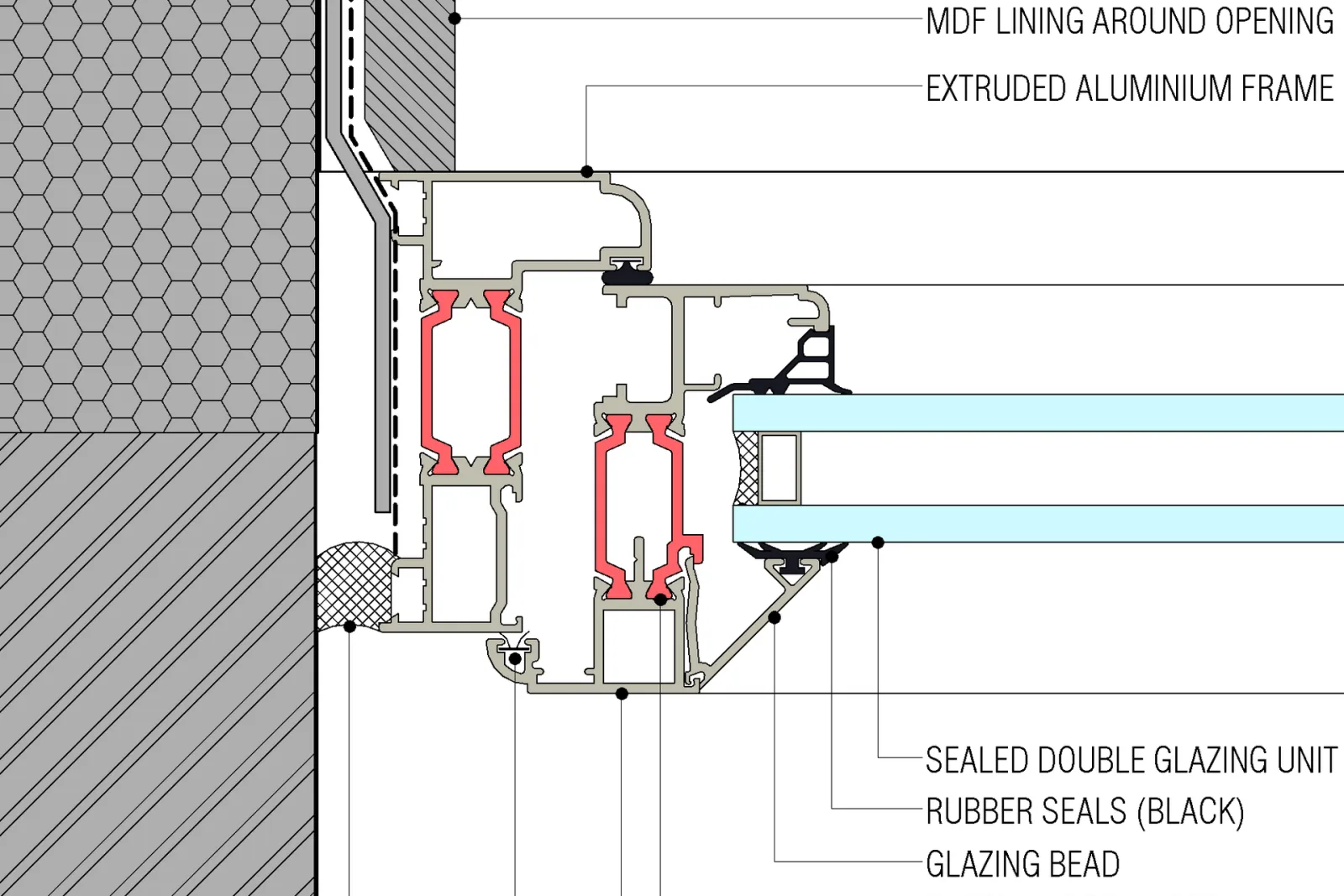
Two fabricators can price the same aluminium window package and end up far apart, and both can be right. The price of an aluminium window, door or curtain wall is built from a handful of drivers: the profile system and its finish, the glass, the hardware, fabrication labour, installation and the commercial terms. Knowing which of them moves the total, and where each one is decided in the tender documents, is what makes an estimate defensible.
The drivers at a glance
| Driver | What moves the price | Where it is decided |
|---|---|---|
| Profile system | Series, depth, thermal break, weight per metre, aluminium price | Specification, thermal and structural requirements |
| Finish | Powder coating or anodising, dual colour, special shades | Specification, elevations, colour schedule |
| Glass | Double or triple, coatings, laminated or toughened panes, size, shape | Schedule, specification, safety and acoustic requirements |
| Hardware | Opening type, concealed or visible, locks, motors, panic and closers | Schedule, door specification, fire and escape requirements |
| Fabrication | Number of fields, corners, joints and special shapes | Elevations and details |
| Installation | Height, access, lifting, membranes, fixings, site conditions | Scope, sections, site information |
| Commercial terms | Payment schedule, retention, penalties, warranty, programme | Invitation and draft contract |
Profile system and aluminium
Profile systems are bought by weight or by length from system suppliers, and the price is linked to the price of aluminium. The metal is traded on the London Metal Exchange, and extruded profiles carry a regional premium and the extrusion cost on top. Many suppliers adjust their prices with a metal surcharge, so an offer priced today may not hold in three months. Put the price basis and the validity period in your proposal.
Within one system, the series decides most of the cost: deeper profiles with wider thermal breaks weigh more and cost more, but reach lower thermal transmittance. A higher wind load or a taller unit can push a position into a heavier series or add reinforcement. Check the thermal target and the structural requirements before you pick the series, not after.
Finish
The two common finishes are powder coating and anodising. Standard RAL colours are the baseline. Dual colour (a different colour inside and outside), special shades, textured or metallic powders and anodising usually add a surcharge and sometimes lead time. Quality labels such as Qualicoat for powder coating and Qualanod for anodising are often required in specifications, so check that your coater holds the right one.
Glass
On large glazed areas, glass is often the largest single material cost. The make-up is decided by the thermal, safety, acoustic and solar requirements:
- Double or triple glazing, low-emissivity coatings, the gas fill and the spacer type set the thermal performance.
- Safety glass: laminated glass for protection against falling and break-in, toughened glass for strength. In façades, toughened panes are often specified with a heat soak test to reduce the risk of spontaneous breakage.
- Acoustic glass: asymmetric panes and acoustic interlayers raise the sound reduction.
- Solar control coatings for south and west façades.
Size matters as much as make-up. Float glass is produced in large sheets, typically 6000 × 3210 mm, and units close to or above that size need special production, handling and transport. Shaped units, such as triangles and arches, cost more to cut and glaze. Weight also counts: float glass weighs about 2.5 kg per square metre per millimetre of thickness, which decides the hardware and sometimes the number of people or the lifting equipment needed on site.
Hardware
A fixed field needs almost no hardware. An opening field needs a full set: hinges, a gear, handles, strikers and often restrictors. That is why the number of sashes in a package moves the price more than its area. Lift-and-slide and parallel-sliding doors, concealed hinges, motorised vents, multipoint locks, panic hardware and door closers each add significant cost. Doors on escape routes and fire doors bring their own hardware requirements and documentation.
Fabrication labour
Labour follows the number of pieces, not the square metres. Every field means cutting, machining, corner joints, gaskets and glazing. A window divided into six small fields takes much more time than one large fixed light of the same size. Special shapes, bent profiles and tight tolerances add more. Your own time records per unit type are the best basis. Generic figures rarely fit your workshop.
Installation
Installation cost depends on the site as much as on the product: the working height, access for lifting equipment, scaffolding (yours or the main contractor’s), weather protection, and how the units connect to the structure. Membranes, foam, fixings and sills are easy to forget and add up over hundreds of metres of perimeter. For curtain walls, brackets and anchors, fire stops between floors, spandrel panels and the choice between a stick system and unitised panels change both the material and the site time.
Size and repetition
Price per square metre falls as unit size grows, because hardware and labour are counted per unit and per field, not per area. Repetition also helps: fifty identical units are cheaper per piece than fifty different ones, because machining set-ups, glass orders and checking are shared. That is why a single square-metre rate misleads. Use it as a check, not as a method.
Commercial terms and risk
The same package costs more to deliver under tough terms. Long payment periods, retentions, penalties for delay, long warranties and a compressed programme all have a cost. So does uncertainty: incomplete drawings or an unclear scope. Price the risk explicitly, or narrow it with clear assumptions and exclusions in the proposal.
Frequently asked questions
Why do aluminium window prices change so often?
Profiles are linked to the aluminium price, which follows the metal market, and glass and energy costs also move. Suppliers pass these changes on through price lists and surcharges, so proposals should state their price basis and validity period.
Why are small aluminium windows more expensive per square metre?
Hardware, corner joints, gaskets and labour are counted per unit and per field, not per square metre. A small window needs almost the same work as a larger one, spread over less area.
Is the glass or the frame the bigger cost?
It depends on the project. On large fixed glazing and curtain walls, glass is often the largest material cost. On windows with many opening sashes, profiles, hardware and labour usually dominate.
What costs are most often forgotten in aluminium window estimates?
Installation materials (membranes, foam, fixings), sills and flashings, lifting equipment and scaffolding, surcharges for dual colour or oversize glass, and the cost of contract terms such as retentions and warranties.